Campus frameworks that turn estate strategy into buildable structure: movement, land use, phasing and design codes for decades of growth.
.webp)
Estate strategies name ambitions; masterplans give them ground to stand on. Our masterplanning service prepares campus frameworks for universities, setting the movement network that connects faculties, the land use and density pattern that locates growth, the open space that gives a campus its character and the phasing that sequences decades of delivery around a working academic year. Frameworks usually build on feasibility studies that established capacity and constraints, and design codes are prepared where the consent route or the institution's governance needs them. Viability and fundability are tested at each move, because a framework the capital programme cannot carry misleads everyone who plans against it. The document is drawn to hold planning weight, supporting outline applications where estates pursue them and giving each later project a structure to answer to, so the campus grows as one place rather than a sequence of accidents.
This is the "should we build?" moment. The team clarifies goals, budget, risks and constraints, explores options (including non-build solutions), and forms the business case. The outcome is a confirmed set of client requirements and a go/no-go decision.
All the groundwork happens here: site information, surveys, statutory context and stakeholder needs are gathered, and the Project Brief and outline programme are agreed. Procurement and planning strategies are sketched so everyone knows the road ahead.
The design team explores options and massing, sets a sustainability approach, and prepares an order-of-cost estimate. Early conversations with planners may begin. By the end of this stage there's a preferred concept that meets the brief and budget.
Look at the whole processIt begins with the estate question and the governance around it. A note through the contact form or to info@aecarchitecture.co.uk describing the campus, the growth or consolidation in view and the timetable opens the conversation. AEC responds with a discussion of constraints, the authority's position and the decisions the framework must support, then a written scope: framework testing where options remain open, a full masterplan with phasing and design codes where direction is set, or support for an outline application. Fees are fixed against the scope, following the institution's procurement. The framework develops through structured engagement, estates, academics, students and the authority heard at the right moments, with reasoning recorded as each decision lands.
Funded education work anchors the practice, so campus frameworks start from how institutions really operate: term rhythms, faculty politics, funding cycles and the estates constraints that shape every move. A masterplan drawn without that grounding reads well and delivers badly; this one is drawn with it.
A campus framework must persuade an authority as well as an institution, and the Academy Estate Consultants group keeps planning specialists beside the design team. Structures are tested against local policy from the start, so the framework a university adopts is one its authority can support through years of applications.
The practice designs campus buildings as well as campus structures, and carries projects through planning, technical design and construction. Masterplans drawn by people who will also deliver within them tend to be honest documents, with plot capacities, servicing and phasing that survive contact with real projects.
Surviving its own delivery. Campus masterplans fail when the first project ignores them, so a good framework is drawn to be used: plot capacities honest enough to build against, phasing that respects term dates and decant realities, movement and servicing that work at every stage rather than only at completion. Flexibility is designed in explicitly, because pedagogy, funding and technology will all change across the plan's life, and a framework that cannot absorb change gets abandoned by the institution it was meant to guide. Design codes govern what each building must achieve while leaving the architectural design of each project room to respond to its moment. The reasoning is documented throughout, so the framework still argues its case when its authors have moved on.
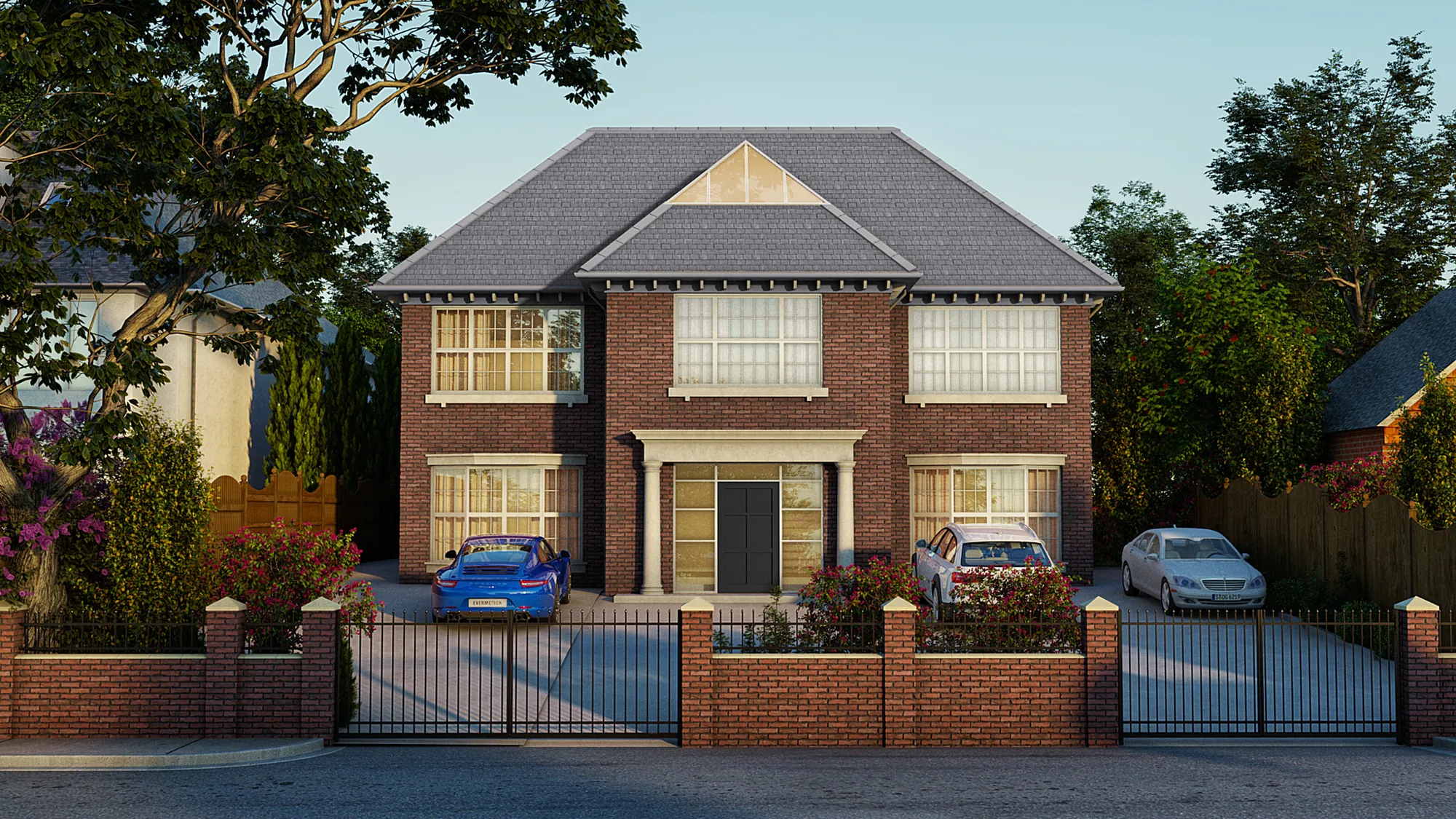
Loughton – 66 Alderton Hill
Loughton
Demolition of an existing dwelling and replacement with a five‑bed home, including associated amenities, external works and parking. AEC were instructed and achieved planning permission.
View projectCampus framework design: movement and access, land use and density, open space strategy, phasing sequenced around the academic year and plot structure with design codes where needed. The framework supports outline applications and guides later projects, aligned to the institution's governance. Scope and fee are agreed in writing before work begins.
The strategy sets direction; the masterplan gives it spatial form. Growth targets, consolidation plans and academic priorities become locations, capacities, phases and design parameters that projects can be commissioned against. Done properly, the framework is the bridge between what the institution intends and what its estate can deliver.
When the estate strategy poses spatial questions it cannot answer: where growth goes, what order it comes in, what each site must carry. Commissioning the framework before the next major project starts prevents that project foreclosing better options. Existing campuses with development already under way can still be masterplanned around it.
Against the scope: the estate's scale, the depth of framework required, the consent route it must support and the engagement process around it, following the institution's procurement rules. Fees are usually fixed per stage, from framework testing through to a full masterplan with design codes, agreed in writing before work starts.
Yes, where the estate's programme justifies one. The masterplan establishes the parameters an outline consent would fix, movement, uses, scale, phasing, and the design codes that guide reserved matters afterwards. An outline consent won on a sound framework gives an institution certainty its capital planning can build on for years.
Send the estate question, the campus involved and the timetable in view, through the contact form or to info@aecarchitecture.co.uk. AEC arranges a discussion of the constraints, the governance route and the decisions ahead, then proposes a written scope and fee aligned to the institution's procurement. Framework work begins once the institution accepts that proposal.
From schools to homeowners, we work closely with every client to deliver thoughtful, lasting architecture here’s what they’ve said about working with us.
We’re always up for a new challenge. Whether it’s a home, a school, or something completely unique.